 You can also read Keith Gallasch’s review of Ensemble Offspring’s concert with the Song Company and Mike Patton as part of the Sydney Festival here.
Category Archives: Reviews
The Trouble with Tragedy

Over at RealTime Keith Gallasch has reviewed Sydney Chamber Opera’s Kurtág-Benjamin double bill featuring …pas à pas nulle part… and Into the Little Hill.
Eugene Ughetti: Australian Percussion Solos
courtesy of the artist
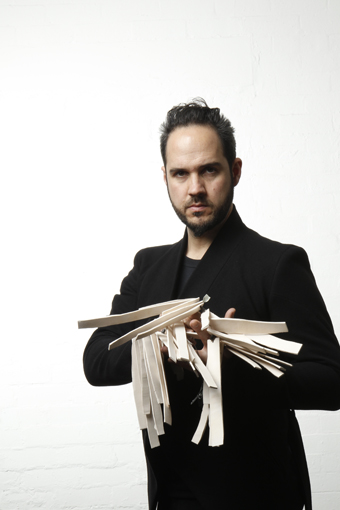
I recently reviewed Eugene Ughetti’s series of Australian Percussion Solos for RealTime. In true Ughetti fashion, the works commissioned by Ughetti paint a unique portrait of Australian composition (not least because half the composers now live overseas). They also raise questions about funding cycles and audiences. What do we, as listeners, want out of a new work? Exactly how do we want to be challenged?
Kim Tan, Lizzy Welsh, et al. : Oscillations
Kim Tan, Lizzy Welsh, Peter de Jager and Alexander Garsden
Oscillations
Northcote Uniting Church
13 December
Kim Tan and Lizzy Welsh’s new duo explores contemporary music on baroque instruments. Baroque violin and flute is a magical combination, with the brightness of the former complementing the mellow tones of the latter. In their first concert, Tan and Welsh team up with virtuoso keyboardist Peter de Jager and composer Alexander Garsden for an exchange between diverse sound worlds.
Peter de Jager’s Prelude explores baroque gesture in the semi-improvised form of a Prelude. The trio of harpsichord, violin and flute begin in a state of gestural unison, with De Jager playing dense trills in the middle of the keyboard. Within this sparkling, rumbling cloud of sound the violin natters away with snatches of diatonic melodic fragments, while the dark flute plays a warbling ostinato. The violin gestures become more protracted as the piece progresses, with arpeggios and repetitive string crossings. The harpsichord also becomes more individuated, with chords and recognisable ornaments. Occasionally the flute and violin take leave of the trio texture for an episode in imitation, riffing on murmurs and double-dotted passages. De Jager progresses around the harpsichord, taking a grand tour of its registers, manuals and stops. The violin and flute are given a similarly thorough working-through, with moments for sautillé bowing and playing from the fingerboard to the bridge. Tan’s control of the baroque flute provided a broad, warm sonority sadly absent from Australian contemporary music. Hopefully many commissions will follow.
Two works by Clarence Barlow utilised modern instruments, but brought them into contact with drones and improvisations on limited rhythmic and modal resources inspired by Classical Indian music. In Until … Version 7, a guitarist plays a pattern of harmonics in an improvised rhythm and order, while an accompanying electronic drone rises imperceptibly in pitch. Garsden maintained a sense of line in each variation, keeping the audience rapt throughout the entire performance. In this way the audience were able to register the magical effect of the changing harmony of the accompanying drone, which gradually introduced complex harmonic beats to different parts of the guitar’s pattern. Until … Version 8 also uses variations on given sets of pitches and rhythms for a solo instrument, but this time for piccolo (played by Tan). The piccolo and electronic parts combine to produce difference tones in the listener, which at times take on striking melodic independence.
Alexander Garsden’s Law II for baroque violin had its second outing at the Oscillations concert. The piece is at once an accomplished exploration of spectralist compositional techniques and a sinisterly theatrical work. Garsden builds a bewildering electronic track out of analogue synthesis and granulated baroque violin. The teeming soundscape of insect-like chirps projects a Heart of Darkness-like horror as the baroque violin enters doing what it does best: bow sound. The piece proceeds in a series of electroacoustic builds and instrumental responses, with the violin becoming more violent as the piece progresses, until the violin is positively attacked with the side of the bow.
Oscillations presented two contrasting lines between baroque and contemporary music. One the one hand, sound, including timbre and temperament. This perspective resonates with our everyday rapport with baroque music. The early music industry today is in part a set of recording practices highlighting “instrument sound”. After two and a half centuries of equal temperament the range of temperaments used in the baroque is also an entirely appropriate point of fascination. On the other hand, notation, including form and gesture. De Jager’s Prelude was particularly representative of this second line. Many baroque pieces were not written for specific instruments and the refinement of notation and practice in continuo playing ushered in new forms and styles that were only secondarily cemented in a particular instrumental tone colour. This line seems more closely aligned with serial and then complexist composition. It will be interesting to see how these different lines are developed in Tan and Welsh’s future concerts.
Chris Rainier, I was a Bum Once Myself: The Boxcar Revelations of Harry Partch
Chris Rainier
I was a Bum Once Myself: The Boxcar Revelations of Harry Partch
Wonderland Spiegeltent
17 November, 2013
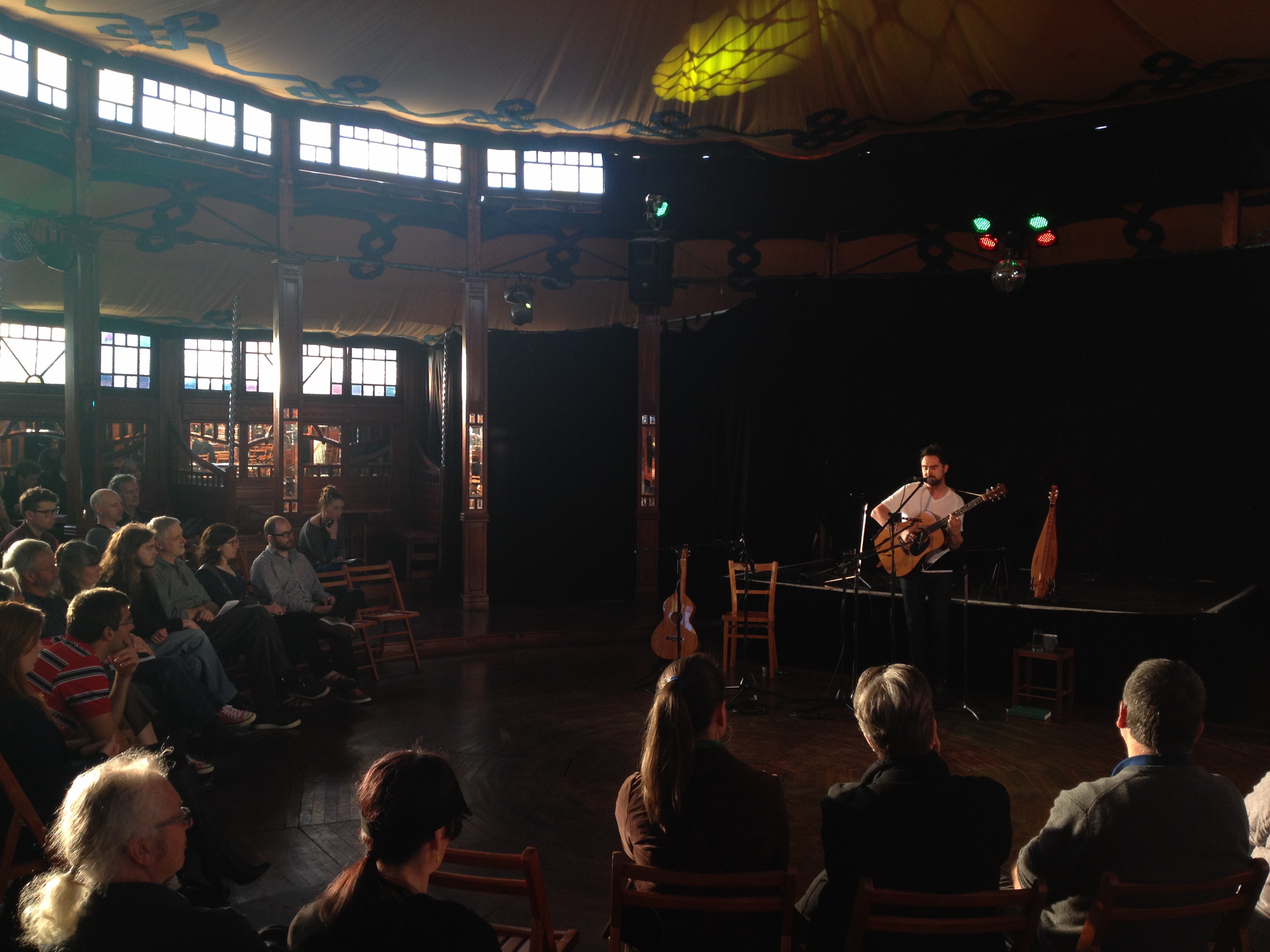
It just so happens that the quickest way from my house to the Wonderland Spiegeltent is the Capital City Bike Trail. The path winds alongside the weeds and algae of Railway Canal, through the underpass with its collection of burnt-out sofas and past the humming towers of the electricity substation. Dark tunnels “subject to flooding” dip under weirs before spitting you out at a six-lane freeway crossing: the mouth of the Melbourne Docklands. The Docklands are a monument to the hubris of Melbourne’s property boom, having little to show for a decade of furious development but a warren of empty apartment blocks and shopping precincts blaring music to nobody. Nowhere is the emptiness felt as keenly as Wonderland, the tiny amusement park wedged between the Melbourne Star (a gigantic ferris wheel built to rival the London Eye, but left motionless since buckling in the summer heat in 2008) and Costco. I could not imagine a better venue for Chris Rainier’s resurrection of the music journal Harry Partch kept while homeless in 1930s America.
Today Partch is best known for his experiments in microtonal tunings and adaptation of instruments to divide the octave into 42 microtones. As in many ancient and non-Western cultures, Partch did not use the extra tones as discrete pitches, but to add nuance and alter the temperament of his otherwise tonal and modal music. In order to perform Partch’s works, Rainier enlisted the help of Preston-based luthier James Mumford to re-fret an acoustic guitar in the style of one of Partch’s early modified instruments.
The altered tuning and fretting of Rainier’s guitar allowed him to reproduce the songs and speech patterns jotted down by Partch on his travels. Partch was studying “hobo speech” as opposed to art music speech and in doing so provided a remarkable document of his time. In “Eight hitchhiker’s inscriptions from a highway railing in Barstow, California,” Partch sets the haiku-like narratives of down-and-out life to his own jagged, colouristic guitar accompaniment. It’s fascinating to think of that ephemeral graffiti about handouts, joblessness, sex, hunger and humour making it all the way to the Dockland streets, which, though empty for different reasons, may serve as portents of depressions to come.
While many people are familiar with Partch’s combination of notated declamation and sparse accompaniment, few know that he also wrote pop songs for money in the late 1920s. Rainier began the concert with “My Heart Keeps Beating Time,” a lilting tune from 1929 that wouldn’t have been out of place crooned over the radio. Rainier used this tune as a thread throughout the concert, performing its 1935 revision as a precursor to his affecting performance of Partch’s “Letter from Hobo Pablo.”
Diary fragments read throughout the performance painted the portrait of a peculiarly self-pitying man at once bemoaning his condition and his traveling companions while reveling in his isolation and proclaiming that “life is too short to spend time with important people.” Partch never seemed to lose this obnoxious, almost adolescent anti-establishment posturing, proclaiming his distance from Western music while using its oldest modes and his ear for a good hook. It is to Rainier’s credit that he was able to present such a three-dimensional image of the composer. Rainier’s soulful performance of these little-known works by Partch is the most engaging and seamless combination of research and performance I have ever witnessed on a concert stage.
Partial Durations is a Matthew Lorenzon/RealTime joint project.
Syzygy Ensemble, Into the Light
Syzygy Ensemble
Into the Light
The Melbourne Recital Centre Salon
18 November 2013
By Hannah Lane
Syzygy ensemble saw in the festive season with the celebratory finale of their 2013 Melbourne Recital Series. Their boundlessly energetic performance traversed a piñata’s worth of new music styles from brilliantly constructed French postmodernism to relentless pop-influenced American minimalism.
With the Salon set up cabaret style, allowing the audience to mingle and relax, the ensemble must be commended for leaving stuffy concert hall conventions at the door and instead infusing the audience with a sense of the sheer fun of some of this music. However, this didn’t mean that when it came to virtuosic moments Syzygy didn’t know how to up the ante!
Andrew Norman’s Light Screens (2002) takes its name and musical inspiration from architect Frank Lloyd Wright’s iconic stained glass windows. The relentlessly episodic form and jazzy harmonies of this piece resonate with the so-called “ecstatic music” movement that is currently dominating the younger and cooler American composition scene headed up by poster boy Nico Muhly and his record label The Bedroom Community. Light Screens oscillated between frenetic activity and moments of repose with rhythmic ostinati and recurring melodic motifs juxtaposed with sustained notes and colouristic timbral effects from the flute, during which the listener could easily imagine the composer marvelling at the ecstatic beauty of Lloyd Wright’s designs as the light moves through them. The violin, viola and flute created striking, sudden bursts of colour and then disappeared into the ether, while Blair Harris maintained an architectural thread—a counterpoint to the fragmented melodic and rhythmic activity—with sustained tones on the cello.
The “party piece” of the evening was undoubtedly French composer Bruno Mantovani’s postmodern mash up, D’un rêve parti (2000). Mantovani may be known to some for his recent controversial comments about female conductors. Fortunately his gender politics weren’t on display in this seamless journey through the major French compositional styles of the twentieth century. The title is a snappy bilingual pun, D’un rêve parti, translating roughly to English as “a departed dream”, as well sounding like “rave party”. We revel in swirling cluster chords and descending arpeggiated gestures from the piano, which bring to mind the keyboard writing of Debussy, Messiaen, and at times Boulez, while the piccolo and clarinet provide melodic gestures reminiscent of Debussy and Jolivet. The build up to the middle section of the work was particularly thrilling, beginning with a lyrical melody from Robin Henry’s clarinet, which signals a move into a new sonic world of seedy cabaret jazz, but not before we hear a piano solo, a cloudy Messiaen-like chord progression and some extended techniques, with Leigh Harrold reaching inside the piano to produce a dark, ominous thumping tone that is joined by weighty groans and growls from the cello, while the flute and clarinet repeat an ever intensifying ascending melodic question mark until we begin to feel like the music is literally bursting at the seams. Suddenly we’re in the world of raucous jazz with Thelonious Monk-style riffs on the piano and shifting syncopated rhythms that sound like a racing heart. The improvised feeling in these passages is breathtaking but Mantovani is not finished with his technicolour dreamlike journey through musical history. We experience the relentless rhythm of an underground techno rave party interspersed with bursts of explosive jazz. Upon introducing the piece, Syzygy flautist Laila Engle mentioned that the ensemble had discovered this work six years ago but did not have the requisite number of musicians to perform it up until this year. The level of commitment and passion for this music was most evident in the ensemble’s performance that night.
Philip Cashian’s Dark Inventions (1992) provided a point of moody repose after the hyperactivity of D’un rêve parti. Low tones on the flute and alto flute were echoed by a series of expansive gong strokes. Shimmering interjections from the glockenspiel floated above a backdrop of shifting blocks of colour as cello, piano, clarinet and flute each added a new timbre.
Also providing a stylistic foil to Mantovani’s dense, hallucinatory musical trip was local composer Ralph Whiteoak’s jazz influenced vignette Along Came A Spider (2012) and the American composer (and co-founder of the iconic new music festival and ensemble Bang on A Can) Michal Gordon’s minimalist pop hit In the Light of the Dark (2008). With their varied use of popular musical material and appropriation of popular musical styles, these pieces worked effectively in providing a sense of musical unity to a diverse program.
Hannah Lane
Partial Durations is a Matthew Lorenzon/RealTime joint project.
Chronology Arts, Bodhasāra

Photo Hospital Hill
Over at RealTime Keith Gallasch reviews Chronology Arts’ new project Bodhasāra, featuring new works composed by five Australian composers on Hindu texts.
Partial Durations is a Matthew Lorenzon/RealTime joint project.
Kynan Tan, Perspectives [macro]
![Perpspectives [macro]. Photo by Sohan Ariel Hayes](https://partialdurations.com/wp-content/uploads/2013/12/kynantan_sleepdatacity_01.jpg)
Perspectives [macro]
Free Range Gallery
9 December, 2013
By Steve Paraskos
Kynan Tan’s first solo exhibition, perspectives [macro] explores the concept of a massive network of points as viewed from a singular perspective. Tan’s idea is that each individual point within a network or system is constantly and unendingly exerting and receiving a gravitational force in space-time on and from each other point within the system. Tan uses self-constructed computer programs to create vivid, non-linear, synaesthetic audio-visual works derived from data sets found within the collective unconscious sphere of the internet. He also projects repurposed archived footage in company with his computer-generated imagery and synthesised sounds.
Inspired by the generally-held notion that “the internet is a repository and library for outsourced thoughts and memories” and Italo Calvino’s Invisible Cities where “imaginary, impossible and dystopian structures are simultaneously fictitious and vivid representations of subconscious constructions”, Tan has created 3D printed sculptures rendering the data of sleeping brain activity, which sit atop an irregular plinth standing near the centre of the Free Range Gallery in Perth’s CBD. Each appears as its own city; the physical manifestation of the collective unconscious of dreaming ideas. These intricate dream-like structures are surreal models of the most audacious modern architecture and are as wondrous as they are varied.
The accompanying sound work begins as a projection of nodes massing and connecting with each other in interactive networks that betoken clicking grains. The growing network resets and builds to the call of an increasing number of beeps. Sweeping cities, colonies of ants, swarms of bees and war planes cover the projection and four screens on the side walls, reinforcing the status of the macro perspective over the negligible individual points. The harmonious phasing swamp of traffic on the busy street of Perth’s CBD just outside the door of the gallery ensures there is never a moment of silence as the wooden floor rumbles to the timed passing of trucks, buses and trains like a surround sound sub.
Microscopic particular static crackles like the communiqués of distant sirens. Moaning modems and granular glass orchestras whir into life as quickly as they cease. This is a truly immersive experience where the sounds and visuals are inseparable. The eyes and ears can only discern the art and ground themselves by referencing the other sense.
Drawing upon Einstein’s conception of gravity that “each individual object exerts forces in both space and time, and that perception of time is relative to the surrounding forces”, Tan explains that the weight of the structure affects the movement of the form through time. This computer generated form is constituted by infinitesimal saw teeth that snake as a whole in all dimensions like the lines of a multidimensional, macrocosmic polygraph. Soon after, flocking particles slowly coalesce as a heavenly choir via Einsteinian algorithmic processes.
This is the astounding and original work. One hopes that Tan’s phenomenal and prescient installation is seen the world over.
Steve Paraskos
Partial Durations is a Matthew Lorenzon/RealTime joint project.
Forest Collective, Calypso
Calypso
Composed by Evan Lawson
Libretto by Samuel Yeo
Forest Collective
December 5
Rosina Auditorium, Abbotsford Convent
By Alexander O’Sullivan
Joseph Kerman, who has been writing on opera since the 1950s, predicted a few years ago that the medium’s future would not lie in traditional houses, with their costly choruses, stage machinery, orchestras and roster of international stars. Rather, it would lie in smaller groups, like the Forest Collective, performing ‘chamber operas’ in the model of Britten’s Albert Herring or The Turn of the Screw.
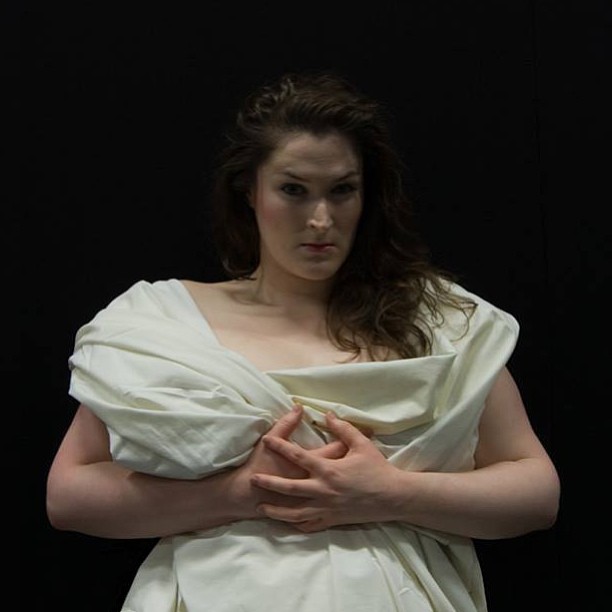
Evan Lawson (composer) and Samuel Yeo’s (librettist) Calypso is composed on an even smaller scale than these models. This forty-minute opera explores a brief episode from the Odyssey, describing how Odysseus becomes shipwrecked on an island and is detained by Calypso (sung by Lotte Betts-Dean on December 5). His memory of Penelope compels him to leave, leaving Calypso heartbroken. Despite the short length of the work, I was struck by how little happens. Oedipus Rex and Elektra (to cite widely differing operatic approaches to Greek myths) have relatively little action, but are unified by a progressive buildup of tension that leads to a violent denouement. Calypso on the other hand merely reaches out her hand to the departing Odysseus—hardly a climatic moment for the audience (and unrealised in the staging of the performance I attended).
Lawson and Yeo have constructed a psychodrama where Calypso is torn between conflicting emotions, symbolised by her servant Uriel and the goddesses Athena and Artemis. Artemis, forcefully sung by Rosemary Ball, represents the will of the Gods, or as Yeo points out in his programme note, the desire for mythological characters to play out their lives according to fate. Athena, whose more sympathetic music was radiantly realised by Janet Todd, urges Calypso to ignore the will of the gods and enjoy Odysseus’s company. Uriel, sung by Michael Lampard, represents the real world, to which Calypso must return from her fantasies.
Lawson’s music is, bar to bar, beautiful. Making the most of his small ensemble, he was able to achieve a variety of surprising effects, displaying a keen knowledge of the limitations of his ensemble. The young soloists and instrumentalists seemed fairly comfortable with his lines, and navigated several tricky moments well. I found the Rosina Auditorium, with its ballroom acoustic, far too loud for the forces assembled, and yearned for a proscenium and an orchestra pit – luxuries clearly beyond the capabilities of the company.
It is clear that Yeo and Lawson’s creative conception exceeded their means. It may be the stench of Wagner that has descended over Melbourne that explains my puzzlement over the piece’s brevity. I thought the ideas, both musical and poetic, cried out for a longer and more detailed treatment than they received here. The music also called out for a larger ensemble, or at least some doublings on the strings, given their sustained lines. Smaller works are more difficult to realise than larger ones. Consider the forty minutes of Stravinsky’s Oedipus Rex, a score that displays a complete unity of conception, where every part, from note to phrase to scene, logically develops a coherent argument. In Calypso I was presented with parts, sometimes intriguing, often skilful and always beautiful, that failed however to present a clear vision of the plight of the heroine.
Perhaps I was expecting more sex. Despite Lawson mentioning Britten’s Peter Grimes and Death in Venice as inspirations, I thought A Midsummer Night’s Dream a more obvious inspiration, for example in the combination of harp and harpsichord. Calypso‘s music sometimes resembled that of the latter work, but without the erotic excitement in Britten’s world of the fairies. I simply didn’t believe that Calypso wanted to bonk Odysseus. Instead, the static staging and somewhat awkward gestures of the singers imparted a severely chaste atmosphere to the proceedings.
Yeo’s libretto sometimes errs on the side of pretension (“as fragile as the candle made of glass” – a Game of Thrones reference?), but in general offers short images well-suited to musical setting. Lawson has the right idea about text-setting, but I was sometimes reminded of a quote from the Dream: “his speech was like a tangled chain; nothing impaired, but all disordered.” This criticism could apply to much opera in English: having deciphered the singers’ diction, the audience is then faced with an abstract poetic text, a further obfuscating layer to be untangled, before they can even consider its relations with the music.
Performing opera on any scale is an extraordinarily expensive undertaking and new works often create issues that retard the rehearsal process immensely. Also, given the current economic and institutional climate in opera, producing new works must always result in a compromise (witness the recent trials of the Met’s commissioning programme). The Forest Collective has put together an accurate and enjoyable realisation of a new score, and is to be congratulated. Perhaps next time there will need to be more realistic expectations about what can be done with such small resources.
Alexander O’Sullivan
Partial Durations is a Matthew Lorenzon/RealTime joint project.
White Fungus Magazine
White Fungus
Issue 13
by Alistair Noble
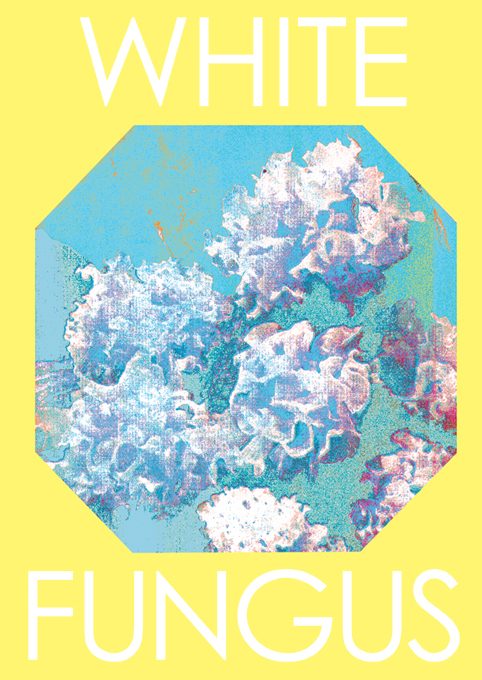
The world is full of odd magazines, weird journals, and sinister periodicals. White Fungus, a magazine published by New Zealanders living in Taiwan, is one of the oddest I’ve met for some time but it is odd in all the right ways. It is subversive and polished, intelligent and arty, attractive and unsettling—all of which was complicated for me by the fact that I bought my copy of this avowedly anti-establishment publication in the suffocatingly distinguished confines of the bookshop at the National Gallery of Australia. You probably won’t find this one at your local newsagent.
We are immediately struck by the pointed absence of advertising. It feels strange to pay $20 for an anti-consumerist magazine, but there it is. It does make us wonder how they pay their way. Presumably, that imported fashion mag you bought last week (90% advertisements for things you and I can’t afford) is making an eye-wateringly unnecessary profit but still, we wonder who is paying for what exactly in White Fungus? Certainly, I paid for it, and in return acquired nearly 200 pages of dense text in both Chinese and English, with a great many diverse and curious pictures.
Slowly, over the next few days, it dawned on me that I had rather more than I had bargained for. This is a magazine with as many words as a novel, with footnotes, with wonderful photographs and illustrations (and a comic story)… but all of that is just the surface detail. Underneath, this is a journal of ideas. In the same sense as slow food and similarly pleasurable, this is a slow mag: it takes time read, to ponder, to digest, and no doubt, it took considerable time to create.
The leading edge of Issue 13 is a series of large-scale feature articles. First, polymath Ron Drummond imagines the first woman on Mars, and much more besides. In what I think may be a very important piece of writing he dreams up a future for humanity that is soundly based in a realistically pessimistic view of our limited human capability but also proposes startling solutions to current problems. He draws inspiration from the Apollo space program—essentially a great work of Cold War period theatre—and notes that it cost each US tax payer only $120. How small our collective imaginations have become in the 21st century, bound by the petty fears our economic and political masters cultivate in us. Our parents used to worry that either reds or capitalist/imperialists would take over the world… we are reduced to scrounging a smaller tax bill for next year.
This is followed by a beautiful essay from Tessa Laird, ‘in praise of bats’. Lyrical, philosophical, and scientifically informed, this is a heartfelt and delightful work. We are drawn into Laird’s thoughts through the elegance of her writing and the palpable romance and peculiarity of her subject: ‘My love affair with bats began in the early 1990s when I visited Sydney’s botanical garden for the first time. Sydney is like Auckland through the looking glass, or on acid’. Well, indeed. Did you know that 2013 is the Year of the Bat? Now you do.
This magazine began as a very local New Zealand publication, now eccentrically translated to Taiwan. I feel that the editors retain a strong affinity for the local over the global, yet the publication has patently developed larger aspirations of its own: concerns range beyond both New Zealand and Taiwan to many other parts of the planet (contemporary music in the US, art in Indonesia, etc.) and taking sights on other parts of the solar system.
At the heart of Issue 13, a series of shorter articles pick up themes that circle around art, music, politics and society. White Fungus editor Ron Hanson writes about the contemporary art scene in Taiwan with curiosity and insight, Kurt Gottschalk provides an interesting introduction to the career of the strangely self-absorbed US composer Robert Ashley, while one ‘Mattin’ reviews some disturbing recent work of conceptual artist Hong-Kai (disturbing in so far as her art is based upon the exploitation of the work of other artists, whose wishes about the outcome of the collaboration are purposefully ignored).
As a virtue of the small editorial and production team, the magazine has a well-curated feel, with a focussed style and an energising undertow of consistent themes. If I find fault with this issue of White Fungus at all, it would be in this: for a magazine ostensibly concerned with society, arts, and politics, it could sometimes push a little further (and a little harder) beyond description and into the realm of analysis and critique. Hanson and Nick Yeck-Stauffer writing about the remarkable (and genuinely puzzling) musician Thomas Buckner exemplify this shortcoming by relying too much on stories of the “and then he met X who introduced him to XX and they went to XXX” type, without telling us what this means in relation to the artist’s work. In general, I appreciate a light touch in political writing—tending toward the implicit—but a few more signposts and moments of analysis would be helpful.
Having said all that, White Fungus (which, by the way, is traditionally a rare delicacy in Chinese cuisine) is a significant and ambitious publication that not only deserves your attention, but is also good for you. Get a copy, carry it around with you to read and re-read as antidote to the shiny ad-filled trash that cycles its way through commercial newsagencies on the way to landfill. This is a magazine to keep around and annotate in the margins (matte paper, so you can use a pencil), to savour and discuss.
Alistair Noble
Partial Durations is a Matthew Lorenzon/RealTime project.
 Partial Durations